
DG Flugzeugbau GmbH / Passion, Power + Performance

DG-1001TE - How to get home - quietly and safely!


A. Concept

Many of you know that after having thought about it at great length we were quite sceptical about electric motors, in particular in connection with self-launchers. The power provided by even the heavier batteries is still not enough, compared to the tank of a combustion engine, even with the new lithium polymer batteries.

However, what about an electric turbo?
This has totally different requirements:

It becomes apparent that designing an electric turbo can be made a reality with far fewer compromises than needed on self-launchers at the moment.

We also wanted to concentrate on a further vital aspect:

B. The safety of an electric motor.

You may think there is nothing unsafe about an electric motor.
Unfortunately you are wrong!

To keep the electric currents at controllable levels you have to use relatively high DC voltages of more than 200 Volt. A DC voltage electric shock of that magnitude however is significantly more dangerous than e.g. from a mains socket in your house. In the latter case the hand is pulled away immediately due to the pulsating voltage - the muscles contract in an uncontrolled but fairly hefty manner - with direct voltage you may "get stuck" until...

Of course all leads are well insulated, but if the batteries are stored in the wing then long leads are inevitable. What would happen if during a heavy field landing the wing swings forward and the uninsulated cable ends get in contact with conducting carbon fibre structures? I don't even want to think about that!

I also don't want to think about what happens to a defective cell if by coincidence the monitoring of exactly this cell is defective. I am not going to elaborate any further, but explain the essential requirements we came up with from the beginning:

If these requirements can be met then this power source can be called the "safest electric motor for gliders".

C. The power source

There was another vital requirement.

This requirement meant that high efficiency was excluded from the start as this would have cost enormous amounts in development. Instead the aim was to use mostly industry-standard parts.

This was partly achieved, but motor, inverter and charger had to be designed specifically after all.

We also found during the development process that the available space and load allowance compared to the required battery is much better in the DG-1001 than in the "LS10-ste" which had been the original plan. This is why as a first step we have are developing the two-seater with an electric motor, and the LS10 will follow once a new generation of batteries is available.

Another point is that the development cycle of new batteries is significantly shorter than the development cycle of a new glider.

This way we can maintain an up-to-date system for years to come and are not restricted to one battery type.

D. The motor control

It is almost a company tradition that DG again do their own thing in this respect.

We will therefore have the well-known DEI-NT. As is tradition at DG Flugzeugbau, to operate the motor you simply have to switch it on, everything else happens automatically.

E. Application

The idea was that everything you can do with the DG-1001S or the DG-1001T should also be possible and legal with the DG-1001TE. The empty weight will not be much higher than that of the 1000T with a full tank, and there is also the option for an electric launch support if you are towed by a weak tug.

F. Availability

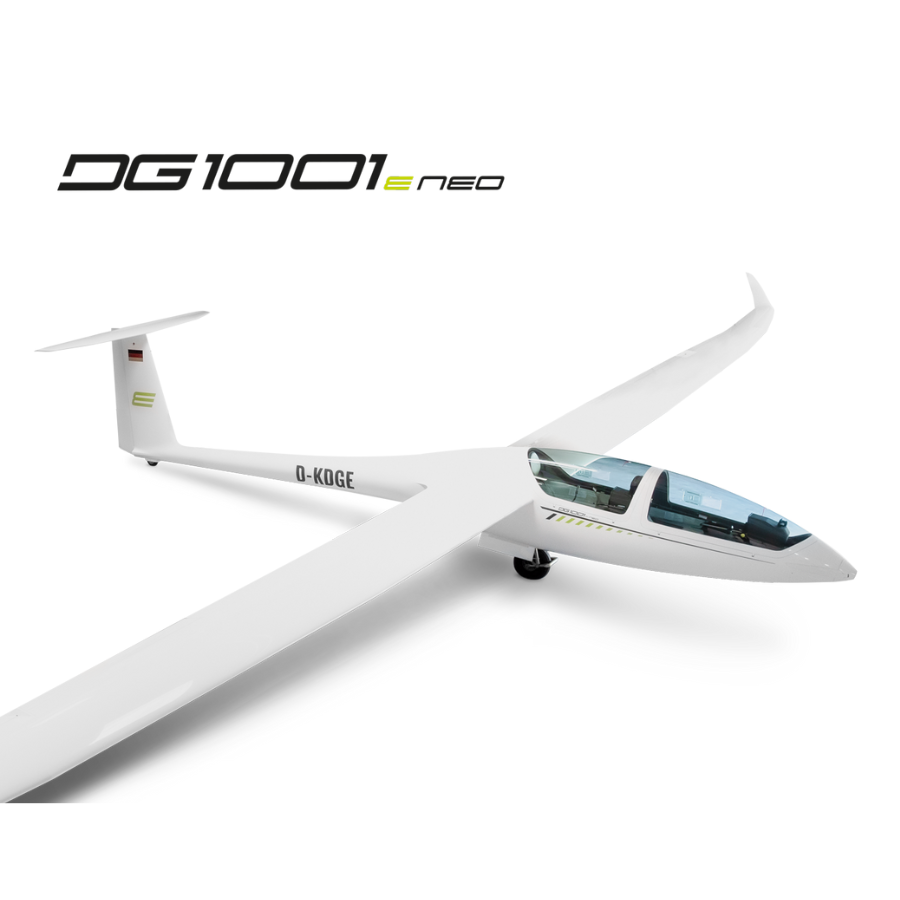
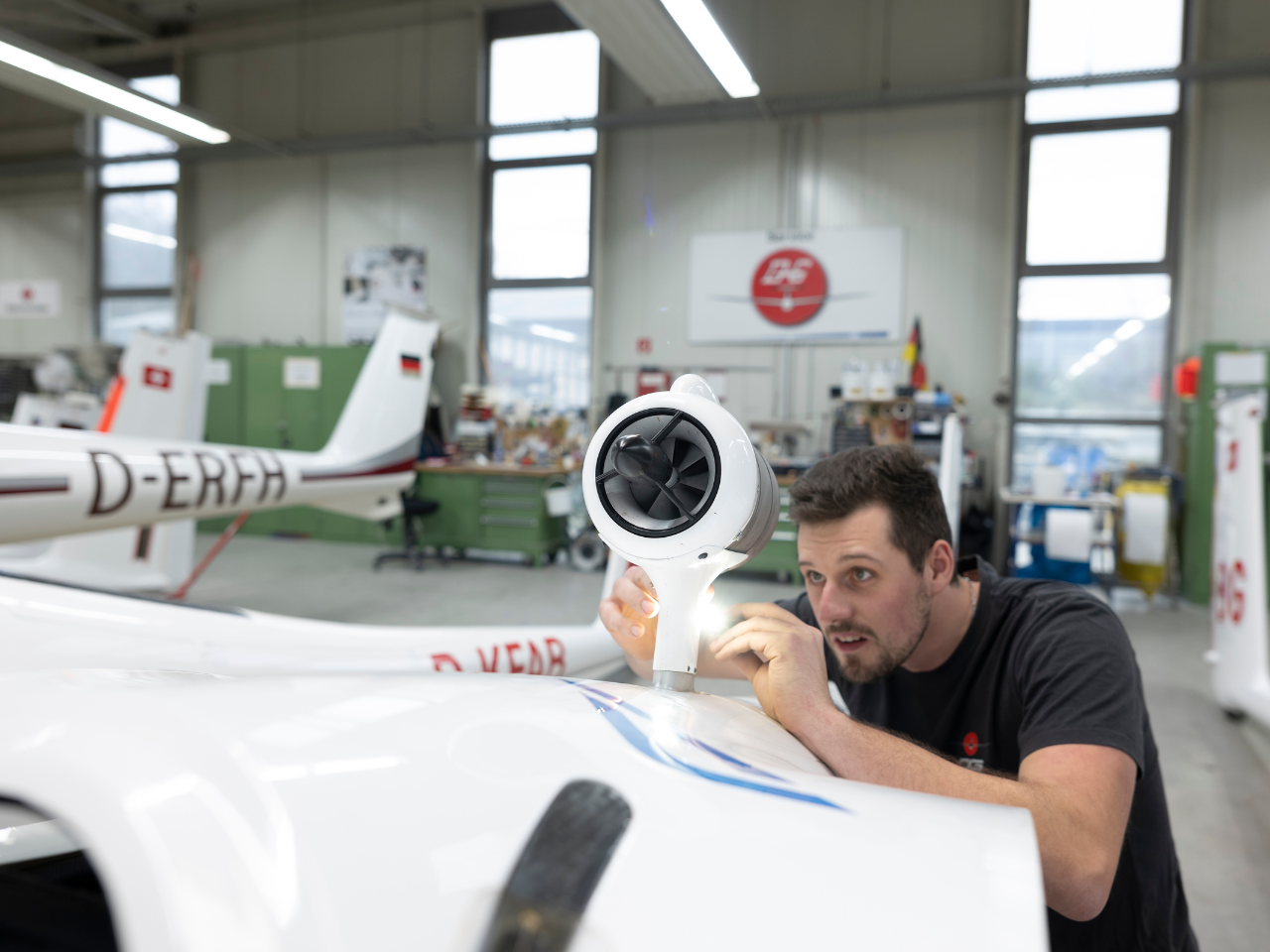
In spring 2009 the development is in full swing - the picture above has of course been fudged a little! At the AERO you'll only see the announcement - our "star" there will be the DG-1000M.

We expect to start serial production in the spring/summer of 2010, however we need the government's approval first ("ZIM", a grant programme designed specifically for SMEs).

You can already buy options for the DG-1001TE to ensure an early delivery date.


Option Form

- friedel weber -
- translation by Claudia Buengen -


The Development continues

We stopped the further development of the DG-1001TE after the AERO 2009, because we wanted to ensure the governmental aid for this project.

Meanwhile, German chancellor Angela Merkel and German finance minister Peer Steinbrueck met each other and officially decided to support the development program of an innovative sailplane manufacturer close to Karlsruhe!

Well, its not that much but it helps to keep the development costs manageable so as to remain the subsequent price for the system affordable.

We assume that the price for the DG-1001TE will be 10.000 Euro higher compared to a classical Turbo version - rather less.

Today's strategy is to develop an electro-turbo propulsion that fits exactly into the motor box of the DG-1001T, in order to achieve a simple and practical feasibility study.

Next steps will be done when the DG-1001TE is flying and when we gain the accurate performance data from practical experience.

However, we maybe have to reschedule the delivery date of produced planes, due to the production start of the DG-1001M.
The owner of options for the self-launcher thereby have priority.

In case of interest in the DG-1001TE you should acquire an option in time too.


Preliminary data sheet of the DG-1001TE


Related topics and articles:


DG-1000 - Development

DG-1001 - the new DG-1000


DG-1000 - Impressions and Trial Flight


DG-1000 - A flight report by Derek Piggott


The DG-1001 trim box


Aerobatic Test flights of the DG-1000S/18m

DG-1000 is humming


Aerotow with the turbo engine running

DG-1001M - the Self-Launcher


Top | Home | Contact | Newsletter | Manuals | Order Information | Spare Parts | Techn. Questions | other Questions