
DG Flugzeugbau GmbH / Passion, Power + Performance

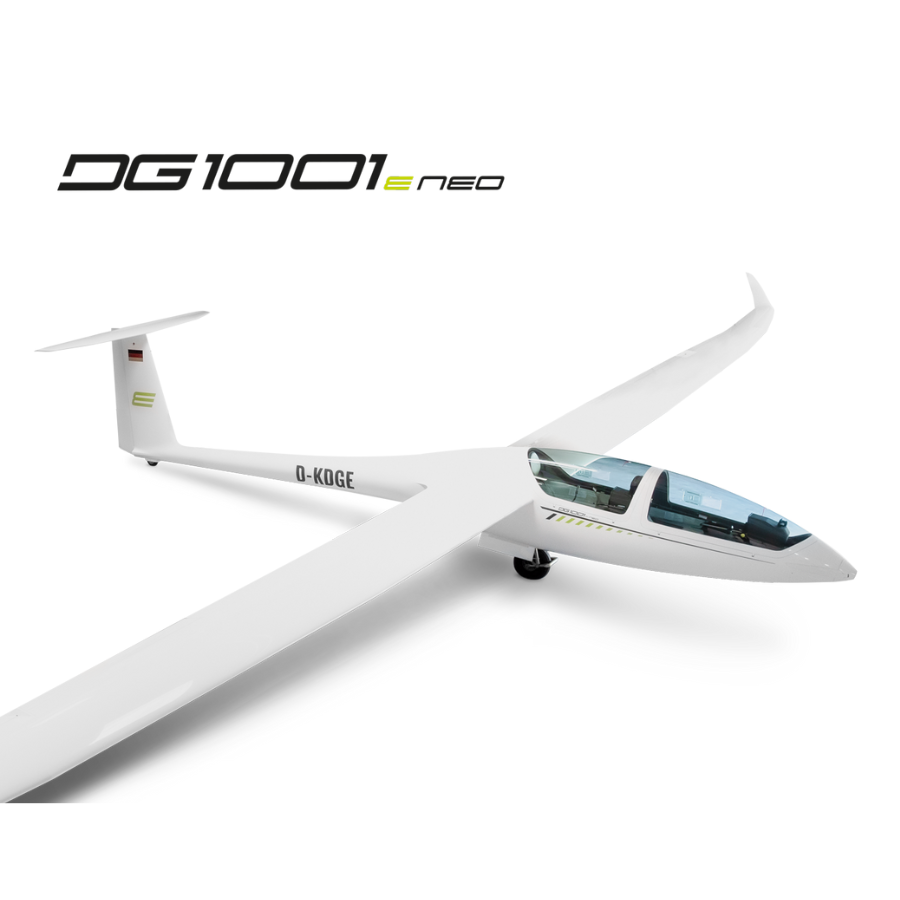
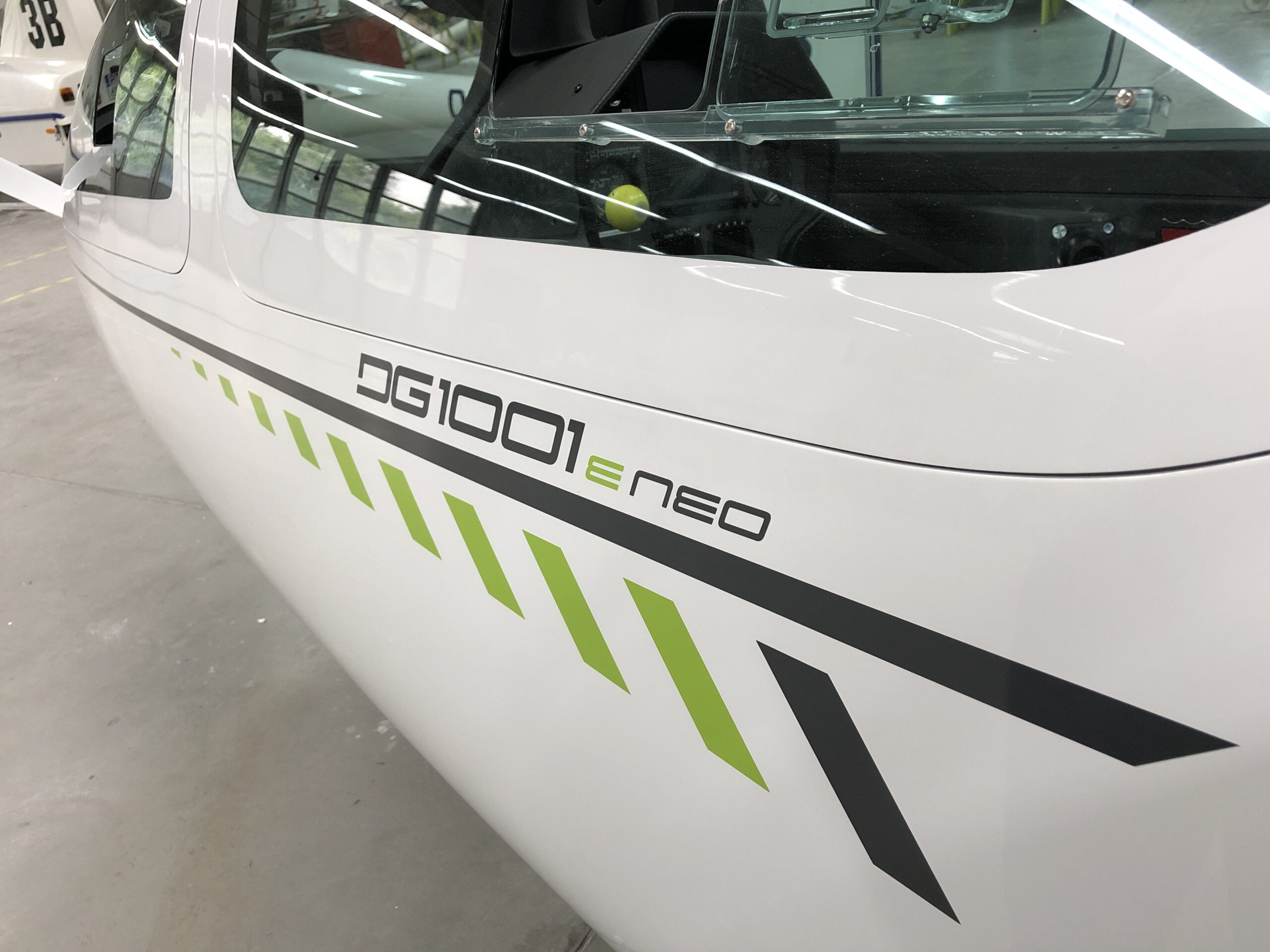
DG-1001M – The New Self-Launcher

“When will the DG-1000M self-launcher finally be ready?”

This question has been posed to us frequently in the past few years, and our answer has always been the same:

When we have the right propulsion system!

We can now announce that the real construction phase of the DG-1000M (as a DG-1001) has begun. The first airplane should be ready for its first flight in the sommer of 2009, and production should commence 2009.

Motor:

It is well known that there is an engine from Solo with a double carburetor and 64 hp for the larger gliders. We are very familiar with this unit, and have already installed it in the DG-505MB. However, certain issues need to be addressed.

We were looking everywhere for a replacement, preferably a four stroke with a dry sump lubrication system and fuel injection. You might not believe it but, we don’t think such an engine exists!  We considered modern motorcycle engines, but they were too heavy and always carried an integrated gearbox, which we neither want nor need. And none of these engines are certified for airplane use.

We have a rather unique set of circumstances. We need an extremely small and light engine that only runs for short periods while giving ultimate performance. When retracted it must fit into the very tight confinement of the fuselage aft of the cockpit.

The best engine for this that exists today is a two stroke engine. The four strokes are at least 30 kg heavier, much bulkier and can therefore not be used.

Development at Solo motors has of course not stood still. On the contrary, the well known motor with twin carburetors has really evolved, which has made it much more suitable for us:

All this cannot be further quantified at present. Exact performance data can
only be given after completion of development.

The Aircraft.

The DG-1001M will have the same wingspan (20 m) as the DG-1001T.
This is very positive, because:

Flaps are not required, as the tried and tested standard large undercarriage
already allows sufficient decalage* for take-off.

*(According to Wikipedia "Decalage" is the angle difference between the wing and the horizontal stabilizer)

The new DG-1001M will also offer the following:

Availability/Price/Distribution.

First deliveries are scheduled for the end of 2009 or beginning of 2010.

We cannot say much about cost yet. To keep the cost of development within reason, we will examine experience gained with the DG-505MB and reuse as many components as possible.

Our sales manager is already taking options that secure early delivery date with a refundable deposit of 3,000 Euro. The first options have already been sold.
 

Otherwise, just wait and see for yourselves!

- friedel weber -
Translation: Lars Lundin


Well, end of January 2009 we announced the new product line DG-1001, and of course the 1000M immediately will become a "DG-1001M" .

The fuselage is glued together, and midst of February the ship is standing in the rough assembly hall.


AERO 2009

On the AERO-Exhibition in Friedrichshafen the DG-1001M was presented to the visitors.
Now all interested pilots are waiting for the test flight possibility.


Maiden Flight of the DG-1001M took place at July 9th, 2009

DG- Info 07-2009

Maiden flight of the DG-1001M

July 9th 2009
DG chief designer Dipl. Ing Wilhelm Dirks together with his co-designer Michael Harms were able to perform the maiden flight of the DG-1001M.

Here are his first impressions:
The new DG-1001 powerplant impressed me with a very good acceleration. So it was possible to lift off after 250m - before the mid runway marking of the small 600 m long Bruchsal grass strip. Also the field was very wet. It had rained very often  today and the preceeding days.

We climbed with about 3 m/s and could cruise with 155 km/h at 6300 engine RPM.
The engine was running very smoothly and hardly any vibrations could be felt in the cockpit. The noise level in the cockpit was so low that it was comfortable to fly without headsets.

With the engine retracted the DG-1001M felt like a DG-1000S without waterballast, no decrease of manoeuvrability could be detected.

The DG-1001M is equipped with a new engine called 2 625 03 developed by the Solo company. This engine has several innovative features distinguishing it from the engines used at present for similar applications, e.g. in the DG-500MB.
An electronic fuel injection sytem provides higher power output at high altitudes and lower fuel consumption and smooth operation at reduced power settings (cruise).
It produces more power for safe selflaunching, approx. 50 kW / 68 hp

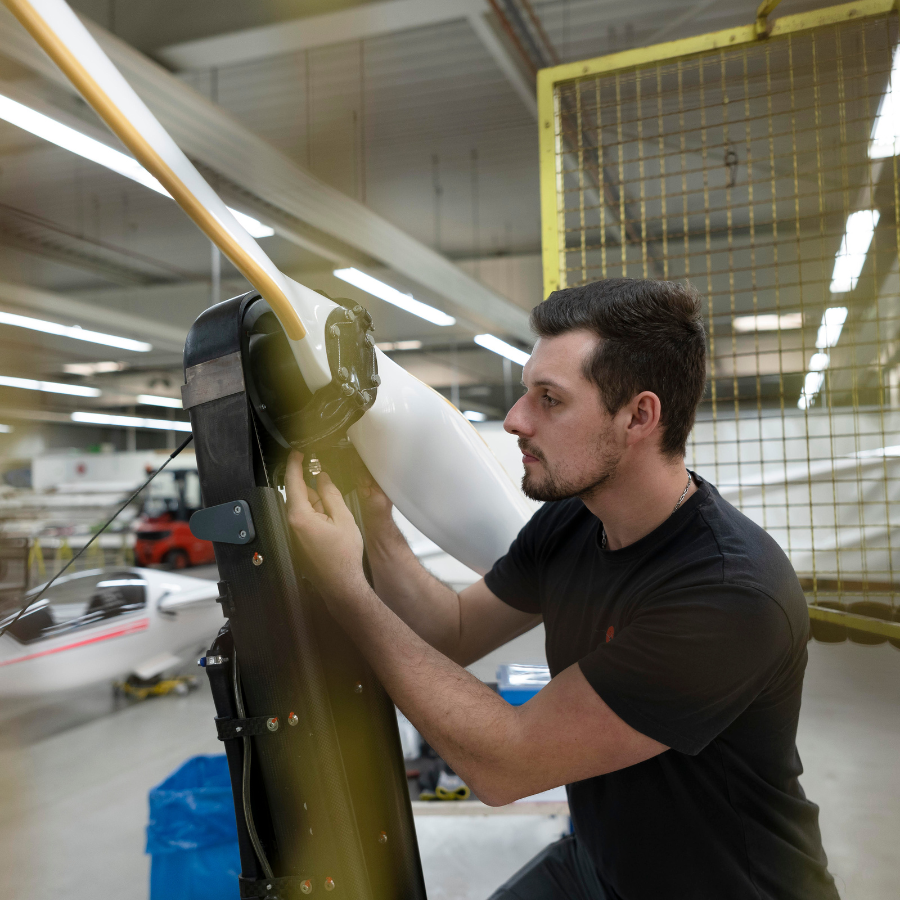
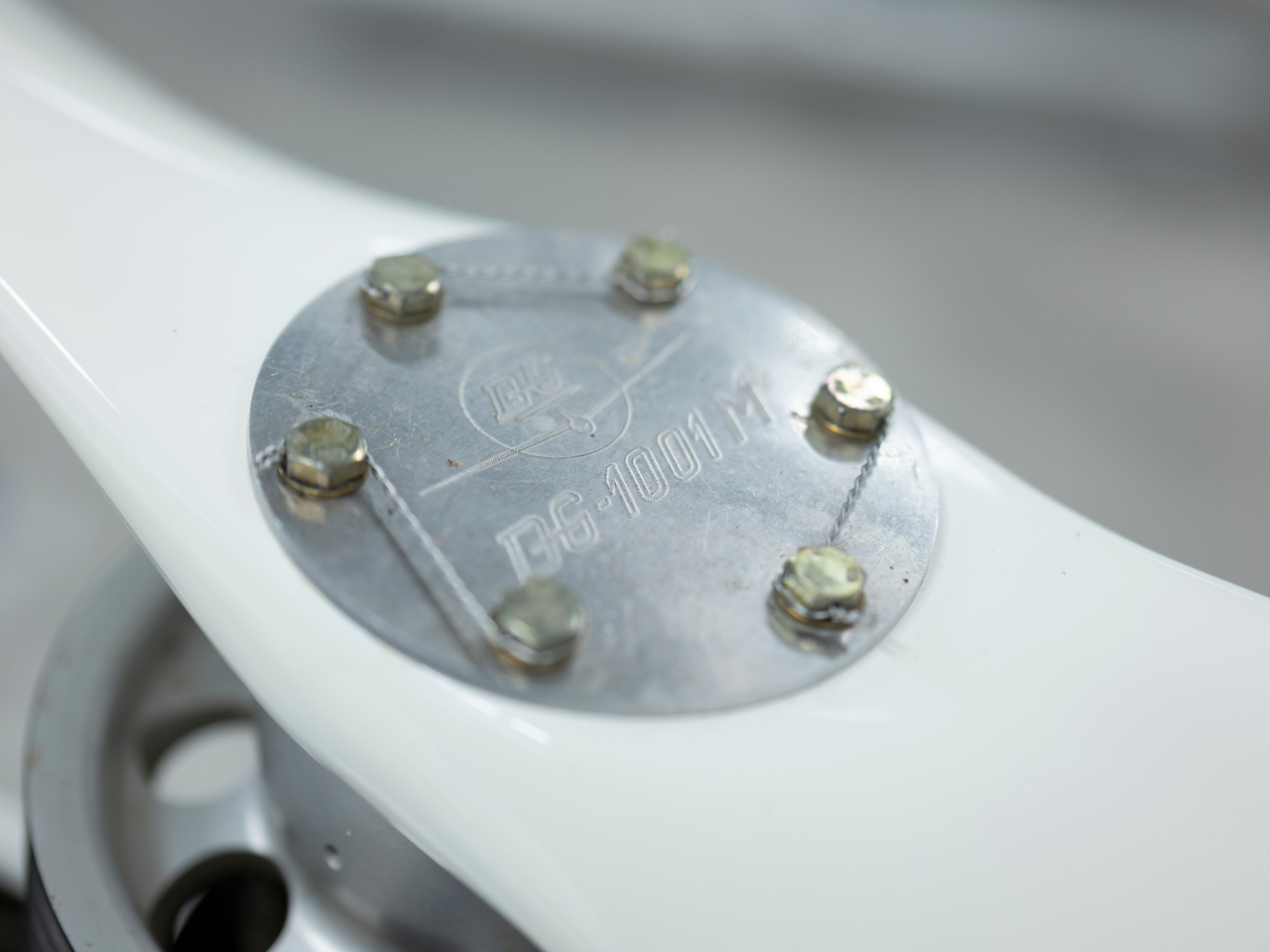
The DG-1001M retractable powerplant system features fundamental differences from the systems using toothed drive belts. The engine, which must be mounted rigidly to the propeller mast when using a toothed belt drive, is mounted flexible to the DG-1001M propeller mast for vibration insulation. Instead of a toothed belt 5 high-tech V-belts will be used. These belts can tolerate the movements between engine and drive system. The system has a redundancy feature as any 4 of the 5 belts can take up the full load.

Bruchsal - July 9th, 2009
Dipl. Ing Wilhelm Dirks


DG-1001M - Three dim View

DG-1001M Take off

DG-1001M propulsion system


DG-1001M on YouTube

A short video of the DG-1001M in Bruchsal on the 3rd of September Pilot: Holger Back 


Report of the Flight Testing of the DG-1001M

written by Holger Back on September 11th, 2009

Since approximately 2 month the prototype of the DG-1001M is airborne for flight testing.

Meanwhile Wilhelm Dirks, Michael Harms and Holger Back accomplished numerous self launches at different airfields. The engine was additionally  tested during various climbs up to 3000m. Main tasks were the accurate adjustment of the electronic fuel injection to different parameters like engine temperature, air temperature, air pressure etc. These adjustments are almost completed and from the so far conducted tests we can draw a positive conclusion:

The propulsion system satisfies all required terms.

Within the next week an optimised engine support will be assembled. (Cable and tubular laying were not optimised for the prototype and some add-on parts had not enough space).

From the beginning of October the DG-1001M will be open to the public so that customers and interested people can see for oneself the positive characteristics.

Holger Back
- Managing Director -


....and this is a letter, Wilhelm Dirks wrote to a potential customer:

Dear Mr. M.......,

In the meantime we have performed several self launches with the DG-1000M.
To see the power on flight performance gain due to the new engine we have performed a comparison flight with a DG-500MB with 20m wingspan.
Both glider were loaded to the same weight, which means we had to put a lot of ballast into the DG-1000M.

We found that the take-off distance on grass runway was quite the same but the climb of the DG-1000M was about 30% better than of the DG-505MB.
The cruise power on is also much faster VH=160 km/h which is due to the changed reduction ratio of 1:2,8 instead of 1:3 and due to the new propeller.

So as I already told you take-off performance is very good even without wing flaps.
The new engine (Schempp Hirth will - as far as we know - not use it for the Arcus!) gives a remarkable climb performance improvement.

Concerning gliding performance I like to point out that the DG-1000 wing section was designed for use without wing flaps. This means that the high speed performance is much better than that of a wing section with flaps at neutral flap setting. This feature is similar to the famous LS8 which is able to compete with flapped gliders in the 18m class as you know.

Further I like to point out the ground handling and taxiing of the DG-1000M which is superb due to the large tip wheels and the steerable tailwheel, similar to your DG-800B. I think the Arcus will not be designed for taxiing without external help.

So your cousin must decide if he wants to trade the DG ease and comfort and safety against a little gliding performance improvement.

With kind regards

Wilhelm Dirks
Leiter der Entwicklung / Chief of Design


Another report of Holger Back:

Hello Friedel,

I would like to add, it's because I am so enthusiastic:

Last weekend the Swiss Glider Pilot Convention took place where I achieved great attention with the DG-1001M, although the DG-1001M was only exhibited.

Afterwards I continued to the airfield of Biella in Italy, in order to make the well in advance scheduled flights with the local customers. The airfield has a length of 1.500 m possessing a paved runway as well as several paved taxiways and I was able to taxi with the customer from the car to the starting point like an aeroplane. Stefano made a video and you can watch it on YouTube:

http://www.youtube.com/watch?v=3OdLAyqh4v4

It is quite impressive how the airplane takes-off and how it is capable of taxiing back after the landing until the retraction of the engine.

Considering the airplane "everything" is working properly. Finally, after the usual problems of a prototype at the beginning, now the airplane makes a mature impression. The engine purrs powerful with only little vibrations and enables the airplane for a 2,5 to 3 m/s climb. Our guests were accordingly enthusiastic.

At noon, my son and I were done and we made an appointment with our customer in Kufstein, Austria, where the weather pretended to be suitable. During the night it rained heavily there. The airfield in Kufstein has a 800 m grass runway and the local executive had a dubious face if the airplane could take-off at all.

We pulled the airplane in the outermost corner of the airfield, but it was that wet that even the car was stuck. No idea of how to roll here! We pulled it back 100 m where it was a little dryer. Thus, getting in, full power and - nobody would believe it! - after nearly 250 m the bird was airborne.

Over the day I made 5 further flights, whereas at one flight a guest and myself weighing over 190 kg. That was of no problem! - yet not for the DG-1001M!!! Smiley

I also worried about that the airplane could touch the ground with its nose due to the wet underground. However, the changed landing gear with the forward placed wheel ensures a high tail loading so that after some stitching  I could easy accelerate and take-off. Everything without any problems and so our prospective customers were also enthusiastic.

What is still missing is a back-up system in case of the unlikely failure of the fuel-injection system. We decided not to allow autonomous customer flights without such a back-up system. Whether this "Safety comes first" strategy is still necessary needs to be discussed. Let's leave it at that.

Many regards from an interesting weekend.

Holger

- holger back -

Translation: Holger Kuhn


Our friends in Austria have made a videoclip showing the take-off distances of the DG-1001M in different configurations. The grass air field in Kufstein was extremely wet during these tests.

Here you can see the flights:


dg-1001m-testfluege.wmv  (56MB groß)


Noise Level Measurement

On Monday 7/12/2010 we visited Augsburg Airport with the DG-1001M in order to perform the noise-level tests with OUV assessor Peter Styrsky. After 6 successful overflights of the test equipment we were able to complete this point of the certification process without any problems.

With 64,1 dB(A) we now stay far below the allowed limits and also fulfill the demanding noise-level rules in Germany  valid since 01/01/2010!

So, the DG-1001M pleases not only its pilots with outstanding take-off performance and climbing, it also reduces the noise level around the airfields. This is a very important point for a lot of airfields in the world which have noise problems!

Here the summary, taken out of the DG-1001M flight manual:

Noise requirements: ICAO Annex 16, Volume I, Part II, Chapter X

Measured noise level: 64.1dB(A) at 780 kg (1720 lbs.)

Noise limit:               74.8 dB(A) at 780 kg (1720 lbs.)

Stefan Goeldner


Technical Data Sheet


Other Articles of Interest:


DG-1000 - the development


DG-1001M the new Freedom


Derek Piggott flies the DG-1000


DG-1000 Trim Box


Aerobatic Test flights of the DG-1000S/18m


DG-1000 T - the sustainer version


DG-1000 hums


Top | Home | Contact | Newsletter | Manuals | Order Information | Spare Parts | Techn. Questions | other Questions