
By Derek Piggott
Gliding and Motorgliding International Issue 12/2003
http://www.glidingmagazine.com/ListFeatureArticleDtl.asp?id=371

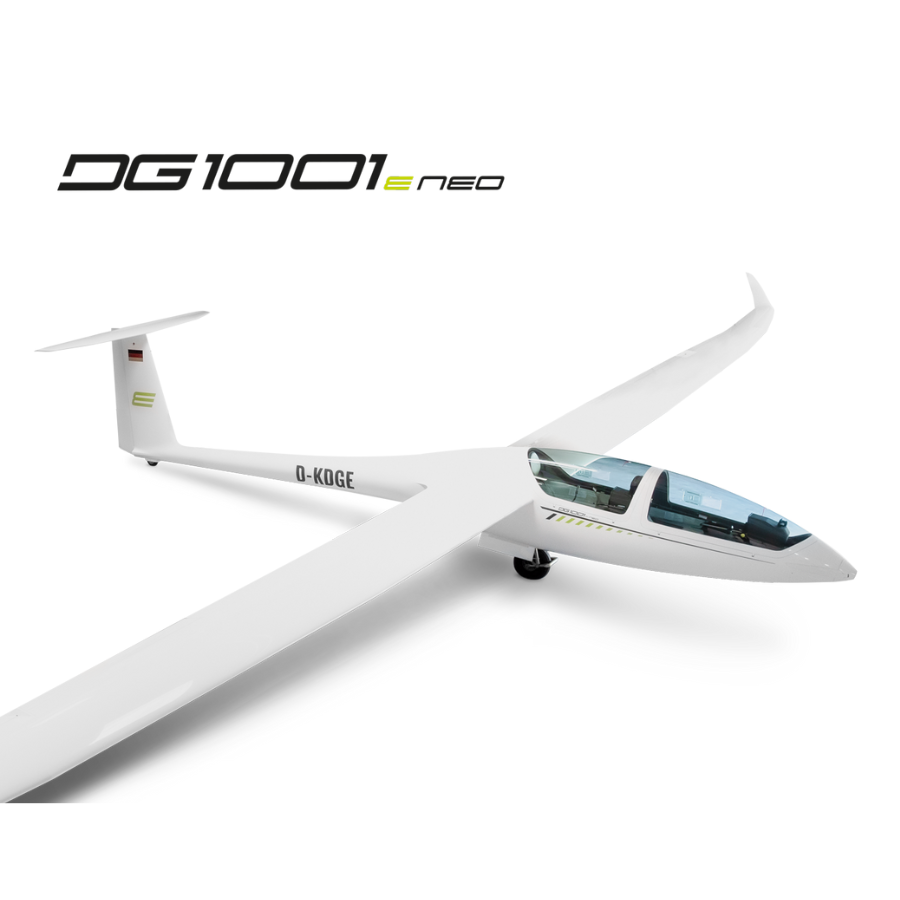
As reported by Dick Johnson and Karl Striedick, the DG-1000 is an excellent two-seater, both as an 18 and 20 meter glider. However, having read their articles in recent Soaring magazines, I was still left wondering if the DG had overcome the deficiencies in the Duo Discus, which has been rightly proclaimed as the best handling and performance 20 meter glider up to this time. Other instructors who have flown the Duo must still be wondering if the DG is an improvement.
Having flown two competitions in a Duo Discus Turbo, I became critical of several points on this lovely aircraft. In particular the rather ineffective airbrakes make it unwise for an instructor to allow a student to attempt an actual field landing, because even a small excess of speed or height cannot easily be corrected. For this reason it has a limited value for cross-country training. In comparing the two types Karl fails to bring this point out, although he makes a good assessment of their performance.
A further point of importance, in my opinion, is the lack of space or provision in the front cockpit for carrying food and water and any other items. This is serious for cross-country training when flights of several hours are the norm. More important is the fact that any articles tucked in between the pilot and the cockpit wall, find there way back into the rear cockpit where they could easily get jammed in the rudder pedals.
Another minor criticism of the Duo is that the undercarriage cannot be operated from the rear cockpit. Having experienced a worrying situation when a student was unable to unlock the undercarriage in a RF5B Sperber motorglider (which also has a similar arrangement), I would be far happier to have the means of lowering it from the rear cockpit. If it can happen to me, it is bound to happen to someone else in the future!
I had the opportunity to fly the DG-1000 at Lasham recently and made a number of flights with winch and aerotow launches in both the 18 and 20 meter configurations.
As an 18 meter it is very suitable for basic training. It is fully aerobatic and has good characteristics for inverted flying and advanced maneuvers. The high maneuvering speed (Va) of 100kts makes it a safer machine for teaching rolling and other advanced aerobatics and being a beautiful looking machine, is ideal for display flying.
I did not fly it with the C of G near the aft limit, but at both mid-range and with the C of G well forward the stalling characteristics were good for training. It has provision for both nose and tail ballast. Even with a heavy student in the front cockpit, excessive rudder is not needed to produce a wing drop at the stall - a desirable feature in a trainer.
Like the Duo Discus, the handling and control harmony are really excellent and it would be almost impossible to make a useful comparison without stepping out of one into the other. Both are fantastic to fly as 20 meter machines.
The DG cockpit may be slightly more roomy than the Duo. It has a partition to prevent objects falling back into the rear cockpit and, of course, has an undercarriage operating lever for the instructor.
I understand that there are three versions available for the undercarriage. The prototype had just a normal retractable, fully sprung main wheel with a hydraulic brake which, although suitable for performance flying, makes the tail very heavy and hard work for ground handling between short flights. Alternatively it can have a fixed nose wheel with a retractable main wheel like the Duo, or a fixed nose and main wheel, either of which must make for much easier ground handling. All versions have a tail wheel.
The DG-1000 is the first production glider to be fitted with the "Piggott hook" to prevent the airbrakes flying open if they are not properly locked. I was hoping that by now this idea would have been adopted by all the other manufacturers as it would prevent many unnecessary launching accidents. Few people think it is necessary with good cockpit drills, but there are still many incidents where the airbrakes are not properly locked before take-off. The system also solves the problem of having your hand close to the release toggle while starting the take-off with some airbrake open to improve the aileron control at low speeds. If you have to hold the airbrake lever, there is no way that you would be quick enough to release if one wing goes down on the ground and starts a cartwheel. Fortunately most new types have greatly improved lateral control and starting with the airbrakes open is not necessary with them.
I firmly believe in the need to demonstrate and teach stalls and spins in a training two-seater. Unfortunately many of our glass two- seaters are really too docile to teach meaningfully about stalling and recovery.
Let's hope this new machine proves itself a worthy replacement for the K-13 as an ideal trainer.
Dear Editor,
I was delighted to read Karl Striedieck, Dick Johnson and Dean Carswell articles on the DG1000. But a little disappointed that they all failed to answer the questions I needed to know about this lovely glider.
For two years running I have been lucky enough to be able to fly a Duo Discus Turbo in the Bidford Motor Glider Championships and, of course wanted to know if my criticisms of that super glider had been dealt with.
In particular, was the DG a more suitable machine for dual cross country instruction. I imagine many other instructors who had already flown the Duo Discus had similar concerns.
A few weeks ago I made a number of flights in the prototype DG-1000 when it was at Lasham for evaluation and I flew it in both the 20 metre and 18 metre configuration on aero tow and winch launches.
Fortunately, with the Duo I have not yet had to make an off airfield landing and I certainly would not feel happy to give an inexperienced pilot a free hand to land in any average sized farmers field in the U.K.. It is too easy to gain a few extra knots on the approach which would almost certainly mean either a ground loop or running into the far hedge. Of course the Turbo makes the glider a little heavier and this reduces the effectiveness of the airbrakes slightly, but I find the airbrakes are really inadequate for training when you really need some reserve capacity to be able to allow the student to attempt the approach into a field and still be able to rescue the situation.
My other major criticism was that there was not enough room for food, drink, maps etc. which are essential for safe cross country flying. Several times I found articles had found their way back into the rear cockpit and could easily have jammed the rudder pedals there.
At first I was happy enough with having to rely on the front cockpit pilot raising and lowering the undercarriage and only being able to assist once it has been unlocked. A simple operation to explain to a student and how can it possibly go wrong? Since then I have been reminded of an experience during the motor glider study at Caddo Mills. On one of the flights I made in the RF5b Sperber motor glider, my student, a qualified power pilot was making his first flight. Returning to the airfield after a short soaring flight, I suggested that he lower the wheel while we had plenty of height. As he leaned forward to operate the locking lever to allow the wheel to drop, he suddenly cried out in pain, “I’ve got cramp, I can’t move”. I could do nothing and just tried to hold height to allow him to recover, all the time realising that it was a borrowed aircraft (from Hobbs), it was bound to do some damage and probably would cause expensive propeller damage. Fortunately after a minute or two he was able to get the wheel released so we made a normal landing.
I was pleased to find all my criticisms of the Duo had been overcome on the DG. The airbrakes are really good and the combination of full airbrake and full sideslip results in an incredibly steep approach. Objects do not find their way back into the back cockpit out of reach and there is a bit more room for my bits and pieces.
In the air the handling is lovely, but I would need to fly both aircraft on the same day to try to decide on the differences. They are both wonderful handling aircraft, certainly the nicest handling of all the two seaters I have flown so far. The DG-1000 is good for stalling and spin training and without any attempt to get the c.g back, it even departs nicely from a turning stall without needing excessive rudder with heavy pilots, an essential I think for training. It is easy to fly and suitable for basic training, full aerobatics and cross country training. I was pleased to learn that there are various versions of the undercarriage available to make ground handling easier as the prototype was hard work to move around without the tail trolley. I hope that Lasham will think of it for their fleet and I, for one, would be happy to take it cross country tomorrow if given the chance.
Happy landings to all,
Derek Piggott
It is a pleasure for us to say, that in the meantime Derek Piggott's club in Lasham have placed an order for
Other Articles of Interest: | |
| |
| |
| |
| |
| |
| |
Top | Home | Contact | Newsletter | Manuals | Order Information | Spare Parts | Techn. Questions | other Questions